Leave Your Message

2026 Top Small Playground Equipment Buying Guide

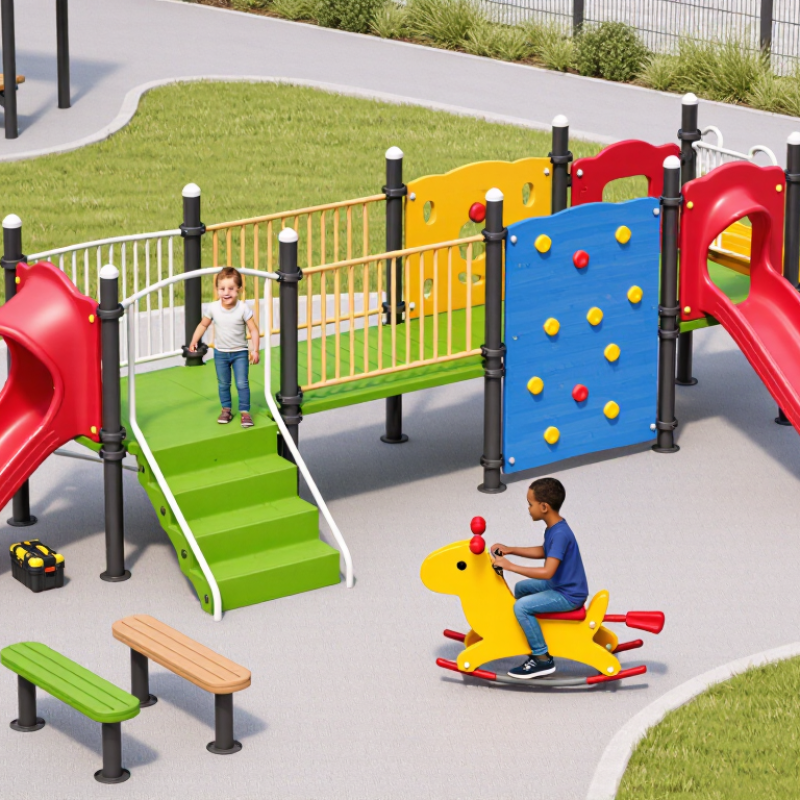
Choosing the right Small Playground Equipment in 2026 requires more than comparing colorful designs. Space, safety, durability, and daily supervision should guide every decision. A compact play area may include a slide, climbing panel, spring rider, or low platform. Each item needs enough clearance for children to move safely around it. Measure the site before reviewing product catalogs. A narrow corner can look suitable, yet become crowded after installation.

This guide focuses on practical evidence, including manufacturer specifications, material quality, maintenance records, and user feedback. Look for corrosion-resistant steel, smooth edges, secure fasteners, and surfaces that remain stable in changing weather. Check recommended age ranges carefully. A structure designed for toddlers may not support older children's movement patterns. Installation instructions also matter. Poor anchoring can create avoidable risks, even when the equipment itself is well made. Local safety requirements should be confirmed with qualified inspectors or relevant authorities before purchase.

Real decisions are rarely perfect. Budget limits may force compromises between appearance, capacity, and long-term maintenance. That deserves honest reflection. A cheaper unit may require earlier repairs, while an expensive model may still disappoint if drainage is poor. Consider how staff or caregivers will inspect the area each day. Look beneath platforms for trapped water, loose hardware, and worn surfacing. Keep records of inspections and repairs. Small details matter. The best choice is not always the largest or brightest one. It is the equipment that fits the space, serves its users, and remains dependable after months of ordinary play.
2026 Top Small Playground Equipment Buying Guide

What Defines Small Playground Equipment in 2026

2026 Top Small Playground Equipment Buying Guide

In 2026, “small” should describe a playground’s footprint and user capacity, not simply its appearance. No single international standard defines small playground equipment. ASTM F1487 and EN 1176 focus more on safety performance, materials, impact areas, and installation than product size. That distinction matters. A compact unit may still require generous fall zones, accessible routes, and careful supervision.

In practical site planning, small equipment often serves four to twelve children. It may combine a low platform, short slide, climbing panel, and sensory activity. A 20-square-metre structure can feel modest, yet its safety surface may extend far beyond the frame. CPSC’s Public Playground Safety Handbook, based on 1990–2000 NEISS data, estimated about 200,000 annual emergency-department injuries linked to playground equipment. The data is dated, but the warning remains useful: limited space must not reduce safety clearance.

Site experience also shows that “small” changes with context. A daycare courtyard needs lower fall heights and simpler supervision. An apartment garden may prioritize quiet movement and durable surfaces. ASTM F2373 addresses equipment for young children, including ages two through five, but age labels should not replace observation. Children do not use equipment as designers predict. That is the uncomfortable part. Measure the actual site, check drainage, test sightlines, and question whether every feature earns its space.
2026 Top Small Playground Equipment Buying Guide: What Defines Small Playground Equipment in 2026?

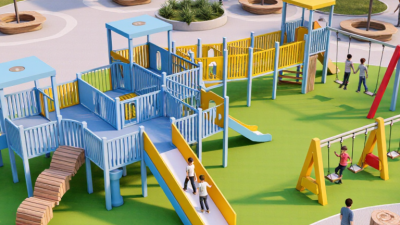
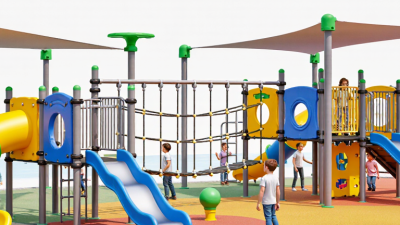
Compact playground equipment is generally selected for limited spaces, lower user capacity, and easier installation. The figures below show typical planning footprints for common small-playground components; actual dimensions and required safety zones vary by design and local safety regulations.

Buying insight: Spring riders and single slides usually require the least equipment space, while swings and compact climbers need larger areas because of circulation and protective surfacing requirements.

Key Safety Standards and Design Features to Evaluate

Small playground equipment should be judged by safety performance, not colorful appearance. The U.S. Consumer Product Safety Commission reports more than 200,000 playground injuries receive emergency treatment annually. Falls remain a major concern. Therefore, buyers should verify impact-attenuating surfacing beneath every elevated platform.

Ask suppliers for current compliance documentation. ASTM F1487 covers public-use playground equipment performance requirements. ASTM F1292 addresses impact attenuation for protective surfacing. In Europe, EN 1176 provides a comparable equipment framework. Local rules may differ.

A certificate alone does not prove correct installation. Check fall zones, openings, pinch points, sharp edges, and anchor stability on site.

Design details matter on compact playgrounds. Choose platforms with guardrails, easy-to-grip handholds, and visible access routes. Avoid gaps that could trap fingers, limbs, or clothing.

The Centers for Disease Control and Prevention emphasizes supervision and age-appropriate equipment. Separate toddler and older-child areas where possible. Small footprints can create crowding, so measure circulation space carefully.

I would also inspect drainage after heavy rain. Standing water often exposes weaknesses that product brochures never mention. A checklist helps, but it can still miss poor ground preparation, hidden corrosion, or a surface that hardens in cold weather.

How to Match Equipment with Space, Age, and User Needs

Choosing small playground equipment starts with measuring the space, not browsing pictures. Leave clear zones around slides, swings, and climbing features. A compact 4-by-6-meter area may suit a low platform, short slide, and ground-level activity panel. Draw the layout with walking paths included. Many buyers forget that children need room to move between activities.

Age changes the right equipment. Toddlers need low steps, wide grips, gentle slopes, and enclosed platforms. Children aged five to eight may enjoy climbing nets, balancing beams, and moderate slides. Older users usually need greater challenge, but height alone does not create good play value. Watch the children using similar equipment nearby. Their confidence, reach, and play style often reveal more than an age label.

User needs also include accessibility, supervision, and maintenance. Choose routes that allow adults to reach children quickly. Consider transfer platforms, inclusive ground games, and surfaces suitable for mobility devices. Check fall-absorbing surfacing, fasteners, drainage, and sharp edges during every inspection. I have seen attractive layouts fail because a gate opened toward a busy path. That mistake was avoidable. Measurements can still be wrong, so review the plan on site before installation. Confirm local safety requirements and use qualified installers with documented inspection experience. Small details matter.

Materials, Accessibility, and Maintenance Considerations

2026 Top Small Playground Equipment Buying Guide

Materials, Accessibility, and Maintenance Considerations

Choosing small playground equipment requires more than checking its size and price. Materials affect safety, comfort, durability, and daily maintenance. Powder-coated metal resists weather well, while sealed hardwood offers a warmer appearance. However, wood needs regular inspection for splinters, moisture damage, and loose fasteners. Recycled plastic can resist rot, but fading and surface cracking still need attention.

During site inspections, I look closely at edges, handrails, platforms, and drainage areas. These details often reveal problems before they become expensive repairs. Accessible designs should include firm, level routes, transfer points, and play features reachable from different heights. Ground surfaces must remain stable after rain. A design may appear inclusive but still exclude children if routes are too narrow or controls require excessive strength. I once underestimated the importance of shaded seating near play areas. Caregivers stayed longer when the space felt comfortable and visible.

Tips: Request material specifications and maintenance instructions before buying. Check every bolt, joint, and protective cap during routine inspections. Clean surfaces with mild soap, then inspect them when dry. Keep a simple repair log with dates, photos, and observed changes. Small cracks deserve attention. Also, review accessibility with actual users when possible. Their feedback may challenge assumptions in the original design.

Budget Planning, Installation, and Long-Term Value Comparison

2026 Top Small Playground Equipment Buying Guide

Budget planning should start with the complete installed cost, not the equipment price alone. Include surfacing, delivery, ground preparation, assembly, inspection, and future repairs. A compact climber may fit a small yard, but its safety zone can require several extra feet. Measure the usable area carefully. My first estimate was too optimistic because I forgot access for delivery equipment.

Installation quality affects safety and long-term value. Use trained installers when anchoring, leveling, and checking fall zones. Confirm local playground safety requirements before purchasing. Compare materials, warranty terms, replacement-part access, and cleaning needs. A lower purchase price can become expensive when specialized repairs or frequent repainting are needed. Still, the most expensive option is not automatically the best choice. That assumption deserves review.

Tips: Request an itemized quote. Keep 10–15% for unexpected site work. Choose smooth, durable surfaces with rounded edges. Ask who will inspect the equipment after installation. Photograph anchor points and keep every maintenance record. Check bolts, platforms, and surfacing regularly. Small defects grow quickly. Leave room in the budget for shade, drainage, and seasonal repairs. A five-year cost comparison often reveals more than the initial invoice.

2026 Top Small Playground Equipment Buying Guide - Budget Planning, Installation, and Long-Term Value Comparison

Planning comparison for compact playgrounds in schools, childcare centers, residential communities, and public recreation areas

Equipment Type Typical Age Range Recommended Capacity Approximate Equipment Footprint Estimated Purchase Budget (USD) Typical Installation Cost (USD) Typical Service Life Maintenance Requirements Long-Term Value Assessment
Compact Two-Deck Play Structure 2–5 years 8–16 children Approx. 18 × 20 ft
Includes circulation area
$8,000–$18,000 $2,000–$5,000 15–20 years Monthly hardware inspection; seasonal cleaning; check platforms, barriers, and protective surfacing.
Single Post Swing Set 2–12 years, depending on seat type 2–4 users Approx. 16 × 24 ft
Includes swing clearance
$2,500–$7,000 $1,000–$3,000 12–20 years Inspect chains, seats, fasteners, frame joints, and ground anchors; replace worn swing components promptly.
Toddler Climber with Low Slide 2–5 years 4–10 children Approx. 14 × 18 ft $3,500–$9,000 $1,200–$3,500 15–20 years Inspect handrails, steps, slide surface, guardrails, and exposed edges; keep the exit area clear.
Accessible Ground-Level Play Panel 2–12 years 1–4 users per panel Approx. 6 × 8 ft per panel $1,000–$3,500 $500–$1,500 10–15 years Check moving parts, activity surfaces, mounting points, and accessibility clearances.
Inclusive Spinner or Rotating Element 2–12 years 2–6 users Approx. 12 × 12 ft $2,500–$7,500 $1,000–$2,500 12–18 years Inspect bearings, rotating clearances, handles, anchors, and pinch-point protection. Good value when social and cooperative play are important.
Balance Beam or Stepping Pod Set 2–8 years 2–8 users Approx. 10 × 16 ft $1,500–$5,000 $700–$2,000 10–15 years Check stability, surface wear, cracks, fasteners, and impact-attenuating surfacing.
Compact Climbing Net or Scramble Wall 5–12 years 4–8 users Approx. 14 × 16 ft $4,000–$11,000 $1,500–$4,000 12–18 years Inspect ropes, connectors, climbing grips, frame joints, and fall-protection surfacing. Good long-term value for active play, provided inspections are consistent.
Freestanding Slide 2–12 years, depending on deck height 1–2 users at a time Approx. 12 × 18 ft $2,000–$6,500 $900–$2,500 12–20 years Inspect slide bed, handrails, ladder steps, exit area, fasteners, and surrounding surfacing. Moderate value as a standalone item; higher value when integrated into a play system.
Spring Rider 2–5 years 1 user per unit Approx. 8 × 10 ft per unit $800–$2,500 $400–$1,200 8–15 years Inspect spring coils, mounting hardware, handles, seats, and pinch-point areas. Low entry cost, but limited capacity and activity variety.
Outdoor Musical Play Station 2–12 years 2–8 users Approx. 8 × 12 ft $2,000–$6,000 $700–$2,000 10–15 years Check mallets, cords, fasteners, sound surfaces, corrosion, and loose components. Good supplemental value, especially in sensory-focused or inclusive play areas.
Budget planning note: The estimated budgets are typical 2026 planning ranges in U.S. dollars for small-site equipment and may vary according to materials, site access, freight, local labor rates, drainage, permits, and required surfacing.
Installation and safety note: Allow additional space beyond the equipment footprint for use zones, circulation, supervision, and fall protection. Final layouts should be reviewed against applicable local regulations and current playground safety standards. Impact-attenuating surfacing should be selected according to the equipment’s maximum fall height and the manufacturer’s installation requirements.