+86-13901441113


Choosing the right Playground Sets in 2026 requires more than comparing colorful designs and attractive prices. Global buyers must examine safety performance, material quality, installation support, accessibility, and long-term maintenance. A bright slide may attract children, but weak drainage, sharp edges, or poor anchoring can create serious concerns after installation.
Jay Beckwith, a veteran playground designer and recognized play-environment expert, has expressed a valuable principle: “Children need challenge, not danger.” This distinction should guide every purchasing decision. The strongest Playground Sets offer climbing difficulty, imaginative spaces, balanced movement, and age-appropriate risk. They also use durable materials, secure fasteners, non-toxic finishes, and surfaces designed to reduce impact injuries.
Details matter. Check weld consistency, platform height, rope strength, and hardware protection. Ask suppliers for test reports, installation drawings, inspection guidance, and replacement-part availability. Regional climate also changes the decision. Coastal projects may need stronger corrosion resistance, while hot climates demand careful attention to surface temperatures and UV stability.
No product is perfect.
Some visually impressive sets may be difficult to maintain. Some affordable options may become expensive after repeated repairs. Buyers should compare lifecycle value, not only the initial quotation. This guide reviews leading Playground Sets for global buyers, while recognizing an uncomfortable reality: product quality can vary between samples and final shipments. Independent inspection remains worthwhile. The best choice combines verified performance, practical design, reliable documentation, and real-world suitability for the children who will use it.
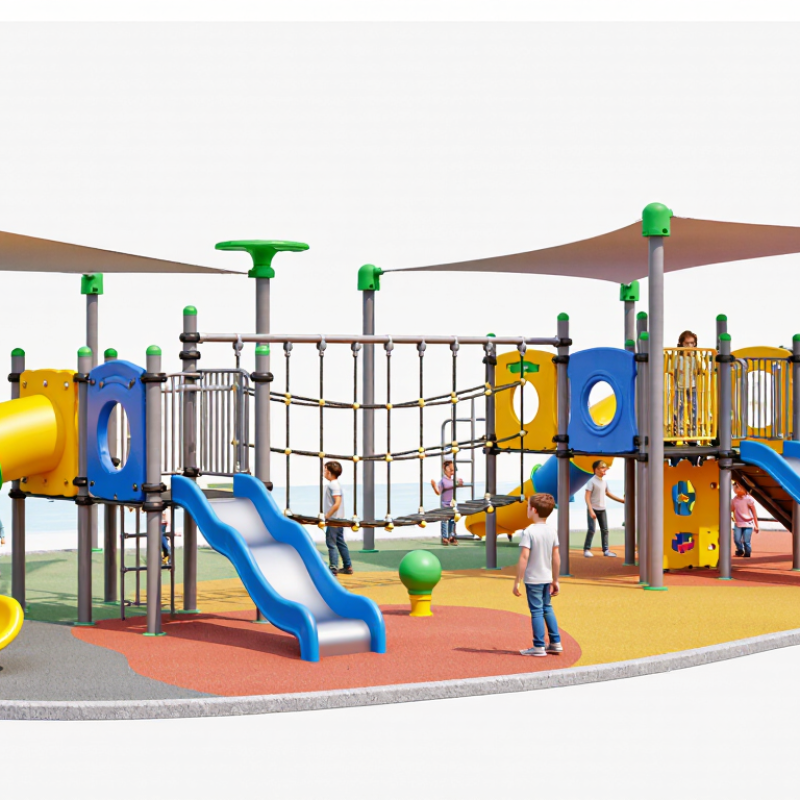
2026 Top Playground Sets for Global Buyers?
Grand View Research projects the global playground market to grow at a 5.1% CAGR. This outlook reflects rising investment in public parks, schools, housing projects, and family recreation spaces. For global buyers, growth alone is not enough. A suitable playground set must match local climate, user age, available space, and maintenance capacity.
5.1%
CAGR
In practical sourcing, modular systems often offer the strongest flexibility. A compact set may include slides, climbing panels, balance beams, and shaded seating. In a coastal area, buyers should examine corrosion resistance and drainage details. In colder regions, durable plastics and low-temperature performance matter more. Check the surface beneath each fall zone. Poor installation can reduce the value of excellent equipment.
Safety documentation deserves careful review. Buyers should request material specifications, load limits, installation drawings, inspection guidance, and evidence of testing against recognized playground standards. Accessibility also needs real planning, not a decorative ramp added later. Wide routes, transfer platforms, and varied play activities can support more children.
The forecast is useful, but imperfect.
A 5.1% CAGR does not guarantee equal growth in every country. Freight costs, local standards, currency changes, and skilled installation can alter the final budget. One common mistake is comparing unit prices while ignoring maintenance access. A cheaper set may require frequent replacement of fasteners, panels, or safety surfacing. Global buyers should assess the full operating cycle before choosing a 2026 playground solution.
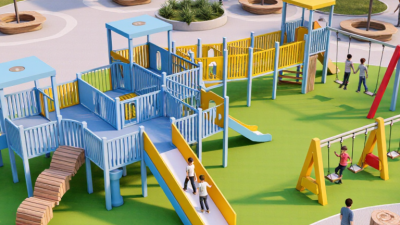
2026 Top Playground Sets for Global Buyers?
The U.S. Consumer Product Safety Commission reports about 200,000 annual playground injuries treated in emergency departments. That figure should change how global buyers compare playground sets. A bright design is not enough. Age range, user capacity, and fall protection require equal attention.
Check whether the structure suits toddlers, preschoolers, or older children. Mixed-age equipment can create uneven risks. Confirm the maximum number of users, not only the total weight. Several children moving together can increase swinging forces and instability. Ask for load tests, material specifications, assembly instructions, and inspection records. Do not accept vague safety claims.
Small details matter. Look for covered bolts, protected pinch points, safe openings, and smooth edges. Verify the required impact-absorbing surface and clear fall zones. Anchoring is essential, especially in windy locations or loose soil. Local climate also matters. Heat, humidity, salt air, and freezing conditions can weaken materials over time. Maintenance is often underestimated. A monthly inspection may reveal loosened hardware, damaged surfaces, or fading age labels. However, even careful buyers miss something. A spreadsheet cannot fully predict children’s behavior. Require clear supervision guidance, independent testing where available, and replacement-part support. The cheapest set may become the costliest after one overlooked risk.
| Playground Set Category | Recommended User Age | Typical Occupant Capacity | Typical Platform Height | Main Fall or Entrapment Risk | Minimum Planning Safety Zone | Recommended Protective Surfacing | Buyer Risk Level | Key Purchasing Check |
|---|---|---|---|---|---|---|---|---|
| Infant and toddler activity unit Low climbing, crawl-through and small slide elements |
6–23 months | 2–8 children, depending on the number of activity positions | Up to approximately 810 mm / 32 in for toddler-accessible platforms | Short-height falls, head entrapment, finger entrapment and unsafe openings | At least 1.83 m / 6 ft around the equipment, unless a more specific layout rule applies | Impact-attenuating material suitable for the equipment’s critical fall height; verify depth after installation and compaction | Medium | Confirm age separation, opening dimensions, handrails, guardrails and slide start height |
| Preschool multi-play set Small climber, slide, panel and crawl features |
2–5 years | 6–18 children, based on the number of platforms and play components | Up to approximately 1.22 m / 48 in for preschool platforms | Falls from platforms, falls from climbers, sharp edges and clothing entanglement | At least 1.83 m / 6 ft around the equipment; slides and moving components may require additional space | Engineered wood fiber, rubber surfacing, sand or another tested impact-attenuating system | Medium | Request fall-height documentation, surfacing test data and a layout drawing showing clearances |
| School-age adventure set Higher climber, bridge, slide and overhead activity elements |
5–12 years | 10–30 children, depending on the equipment footprint and component count | Up to approximately 1.83 m / 72 in for school-age platforms | Higher-energy falls, collisions, climbing misuse and entanglement at moving or overhead parts | At least 1.83 m / 6 ft around fixed equipment; swing travel and other moving zones require additional clearance | Use surfacing certified for the specified critical fall height; loose-fill depth must be maintained during operation | High | Check maximum fall height, use-zone overlap, structural loading and independent installation inspection |
| Inclusive ground-level play area Transfer platform, sensory panels and accessible routes |
2–12 years, subject to the design and access route | 8–25 children, with capacity determined by activity positions and circulation space | Ground level to approximately 1.22 m / 48 in | Trips, wheelchair transfer falls, pinch points and blocked circulation routes | Maintain the equipment-specific use zone plus an accessible route and turning space; do not treat circulation space as usable capacity | Firm, stable and slip-resistant accessible routes combined with impact-attenuating surfacing below elevated elements | Medium | Verify accessible route width, transfer clearances, edge protection, drainage and surface firmness |
| Swing bay Belt seats, bucket seats or adaptive seats |
6 months–12 years, only when the seat type matches the child’s age and ability | 2–6 seats per bay; one child per designated seat | Varies by swing frame and seat design | Impact from moving swings, falls from seats and collisions in front or behind the swing arc | For a conventional swing, plan the front and rear use zone at approximately twice the vertical distance from the pivot point to the seat; maintain side clearance as well | Impact-attenuating surfacing across the full swing-use zone, with additional attention to high-wear landing areas | High | Measure the actual swing height and travel zone; do not place fixed equipment inside the swing arc |
| Rotating equipment Spinner, carousel or rotating platform |
2–12 years, depending on speed, handholds and platform design | 4–12 children, based on the manufacturer’s tested occupant load | Ground level to approximately 900 mm / 35 in | Entrapment below platforms, falls while rotating, impact with nearby users and excessive rotational speed | Provide a clear zone around the complete rotating envelope; keep circulation routes outside the equipment’s moving area | Impact-attenuating surfacing where a child could fall from the platform or access points | High | Request tested occupant load, rotational-speed limits, underside clearance and maintenance instructions |
| Climbing and overhead unit Net climber, arch climber or overhead rings |
5–12 years | 4–16 children, based on tested simultaneous-use positions | Approximately 1.22–1.83 m / 48–72 in | Falls from height, falls onto another user, finger entrapment and failed grips or connections | At least 1.83 m / 6 ft around fixed equipment, with additional clearance for projections and exit paths | Surfacing must be tested for the highest accessible fall point, not merely the average platform height | High | Review connection strength, grip dimensions, fall-height calculation and replacement schedule for wear parts |
| Large composite play system Multiple slides, climbers, bridges and elevated platforms |
2–12 years only when age zones are clearly separated | 20–60 children, subject to the tested design capacity and site supervision level | Approximately 810–1,830 mm / 32–72 in, depending on the age zone | Mixed-age collisions, falls from elevated components, route conflicts and inadequate supervision | Design separate toddler, preschool and school-age use zones; maintain at least 1.83 m / 6 ft around fixed equipment where applicable | Use a documented, impact-tested surfacing system matched to every distinct critical fall height | High | Require a site-specific plan, age-zone separation, capacity calculation, drainage plan and post-installation inspection |
Important: Capacity figures are planning ranges, not universal occupancy approvals. Final capacity depends on the tested design, component count, site supervision, local building rules and the supplier’s installation documentation. The 1.83 m / 6 ft value is a commonly cited minimum planning distance for fixed playground equipment; swings, slides, rotating equipment and other moving components require equipment-specific use zones.
Reference basis: U.S. Consumer Product Safety Commission, Public Playground Safety Handbook; ASTM F1487, Consumer Safety Performance Specification for Playground Equipment for Public Use; EN 1176 series, Playground Equipment and Surfacing; ISO 8124-4, Safety of Toys — Activity Toys for Domestic Use.
2026 Top Playground Sets for Global Buyers?
Safety Compliance Matrix: ASTM F1487, EN 1176 and ISO 8124
Global buyers should compare standards before comparing colors, layouts, or prices. ASTM F1487 covers public-use playground equipment in the United States, including entrapment, fall zones, structural strength, and protrusion risks. EN 1176 addresses equipment, impact-attenuating surfacing, installation, and inspection across European markets. ISO 8124 belongs to the toy-safety series. It may support assessments for domestic play products, but it does not replace a public-playground standard.
The U.S. Consumer Product Safety Commission’s Public Playground Safety Handbook reports more than 200,000 annual emergency-department visits linked to playground equipment. That figure makes documentation more than paperwork. Buyers should request test reports, material specifications, installation instructions, and maintenance records. Check critical dimensions on the actual unit, not only in a brochure. A small gap near a slide platform can become a serious entrapment concern. Assumptions fail here. I have seen compliance tables look complete while omitting surfacing depth or post-installation inspection duties.
Tips: Build a matrix with separate columns for ASTM F1487, EN 1176, and ISO 8124. Mark each requirement as “verified,” “not applicable,” or “needs evidence.” Confirm certificates against the exact model, age range, and configuration. The European Commission’s Safety Gate reports repeatedly show that incomplete technical information can delay corrective action. Local installation conditions still matter, even when factory testing passes.
In 2026, global buyers are choosing playground sets by purpose, site conditions, and long-term value. Modular systems remain practical because buyers can add slides, climbing panels, or shade structures later. This reduces replacement costs when community needs change. During site reviews, I look for stable foundations, rounded edges, drainage, and clear sightlines for supervisors. A colorful layout means little if caregivers cannot see children clearly.
Inclusive playgrounds now support different abilities through ramps, transfer platforms, sensory panels, and quiet retreat spaces. Good design does not place accessible equipment in a separate corner. It connects major play routes. Nature-based sets use timber textures, boulders, rope, sand, and planting zones to create varied movement. However, natural materials need regular checks for splinters, moisture damage, and loose surfaces. Nature is not maintenance-free.
Smart playgrounds may add impact sensors, usage tracking, lighting controls, or digital learning features. These tools can help operators identify busy areas and plan inspections. Yet technology can fail, become outdated, or distract children from physical play. Buyers should request clear data policies, simple maintenance procedures, and manual alternatives. A thoughtful specification balances innovation with repairability, safety inspection routines, local climate, and available staff skills. That balance is difficult. It deserves honest review before purchase.
For global buyers, a playground set should be judged beyond its catalog price. A practical scorecard starts with total cost of ownership (TCO). Add freight, import handling, foundation work, installation, inspections, spare parts, and cleaning. A low quote can become expensive beside a school yard. We have seen projects lose weeks because drainage work was ignored. That detail matters.
Warranty terms deserve a line-by-line check. Ask what the warranty covers, who pays return freight, and whether labor is included. A five-year frame warranty may exclude coatings, hardware, or damage from coastal air. Keep written records, photographs, and maintenance dates. Lead time should include production, port transit, customs clearance, and local delivery. Request a realistic window, not an optimistic promise. A spare anchor can arrive late. Children cannot use an unfinished site.
Durability is more than thick steel. Inspect weld quality, UV-stable plastics, corrosion protection, impact-absorbing surfacing, and replaceable wear parts. Ask qualified suppliers for test reports, load guidance, and maintenance intervals. In hot, wet, or salty regions, materials behave differently. Our scorecard would give extra weight to drainage and fastener access, though this is not universal. We still question our assumptions. A durable set that is difficult to repair may create hidden downtime. Compare expected service years against annual upkeep, not price alone.