What are Play Sets and How Can They Enhance Playtime?
Play Sets have become essential tools in early childhood development. According to the American Academy of Pediatrics, play is crucial for children's social, emotional, and cognitive growth. Play Sets offer diverse experiences that foster imagination. They encourage creativity, enhance problem-solving skills, and promote social interactions among peers. A report by the Toy Association states that 92% of parents believe playtime is vital for development.
Research indicates that children who engage with Play Sets show improved motor skills and enjoy more collaborative play. These sets can range from simple wooden blocks to elaborate themed sets, catering to different age groups and interests. The versatility in design promotes exploration and discovery. However, not all Play Sets are equal. Quality and safety should always be prioritized.
Parents face overwhelming choices in the market. It can be difficult to determine which sets will best support their child's growth. As the industry evolves, staying informed about product quality, safety standards, and developmental benefits is essential. Investing in the right Play Sets can create enriching playtime experiences that will last a lifetime.

What Are Play Sets? An Overview of Types and Designs
Play sets are designed to stimulate children's imagination and creativity. These sets come in various types, such as outdoor, kitchen, or construction themes. Each type features unique elements that engage kids in different ways. For instance, an outdoor play set often includes slides, swings, and climbing walls. These physical activities promote fitness while allowing social interaction among children.
Inside play sets often mimic real-life scenarios. A kitchen set may come with pretend food and utensils that encourage role-playing. This type of play helps children develop essential life skills. Through these interactive experiences, kids learn sharing, cooperation, and problem-solving. When combined with storylines, the possibilities become endless.
However, not all play sets are perfect. Some may be too complex for younger children, causing frustration. Others might lack safety features, leading to potential hazards. It’s important to evaluate a play set carefully to ensure it meets a child’s developmental needs. Choosing the right play set can greatly enhance playtime, making it more enjoyable and educational.
What are Play Sets and How Can They Enhance Playtime?
| Type of Play Set |
Recommended Age |
Benefits |
Key Features |
| Dollhouse Play Sets |
3 - 10 years |
Encourages imaginative play, social skills, and storytelling |
Multiple rooms, accessories, and figures |
| Building Block Sets |
2 - 12 years |
Enhances fine motor skills, creativity, and spatial awareness |
Interlocking pieces, various shapes and sizes |
| Outdoor Play Sets |
3 - 12 years |
Promotes physical activity, coordination, and teamwork |
Climbing structures, slides, swings |
| Themed Adventure Sets |
4 - 10 years |
Encourages role-playing, problem-solving, and creative thinking |
Unique themes, figures, and scenarios |
| Art & Craft Play Sets |
5 - 12 years |
Boosts creativity, self-expression, and fine motor skills |
Includes supplies like paints, clay, and tools |
The Role of Play Sets in Child Development and Learning
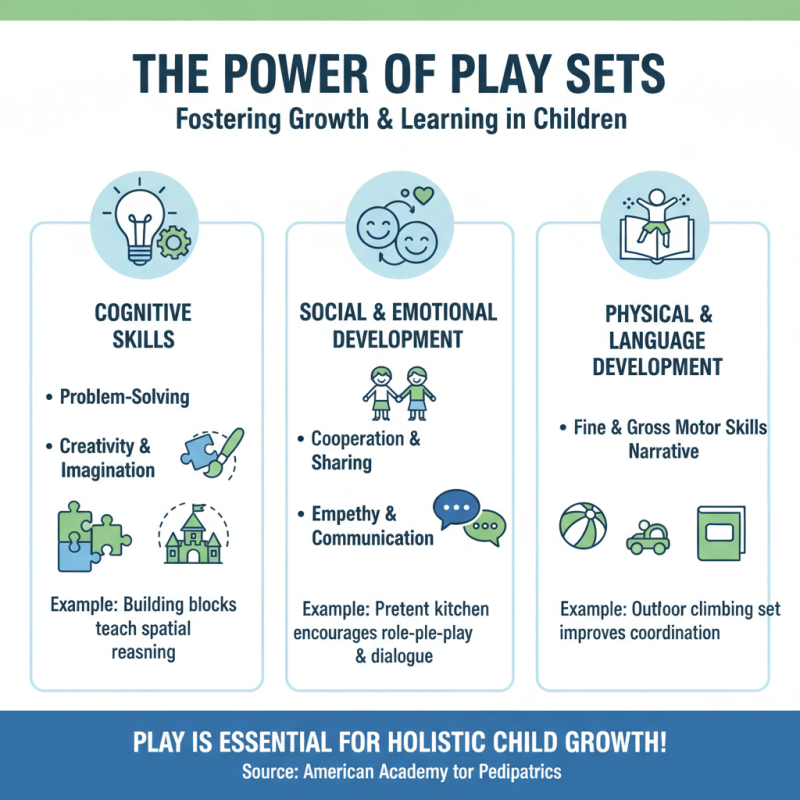
Play sets are essential tools in fostering child development. They provide not just entertainment but also opportunities for learning. According to the American Academy of Pediatrics, play supports cognitive, social, and emotional growth. When children engage in imaginative play with sets, they develop problem-solving skills and creativity. For instance, a child pretending to cook can learn about measuring and following instructions.
Statistics show that 70% of a child's brain development occurs before age five. This highlights the importance of interactive play. Play sets encourage collaboration. Children learn to share, negotiate, and empathize with peers. Engaging in role play enhances social skills. A study by the National Association for the Education of Young Children (NAEYC) found that children who regularly engage in play-oriented activities tend to have better communication skills later in life.
However, not all play experiences are equally beneficial. Passive play, such as screen time, lacks the advantages that hands-on activities provide. Parents should evaluate the types of play their children engage in. Creating an environment rich in play set opportunities can stimulate imagination. It’s crucial to balance structured and free play. Reflecting on these aspects can lead to more effective developmental outcomes for children.
Statistics on Playset Popularity: Trends in Toys and Playtime
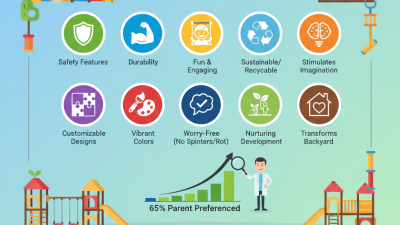
Playsets have become increasingly popular, reflecting trends in children's playtime preferences. According to a recent industry report, over 65% of parents view playsets as essential for social skills development. Playsets encourage collaboration and imagination, making them ideal for multi-child households. In 2022, sales of outdoor playsets surged by 30% compared to 2020. This indicates a clear shift towards valuing hands-on outdoor experiences.
Furthermore, surveys show that children engage more creatively with playsets. Around 70% of educators note that structured play leads to better cognitive and emotional skills. However, there is a challenge: not all playsets are created equal. Many parents express concern about safety and durability. It is crucial to consider age-appropriate designs. A reported 20% of injuries occur from poorly designed equipment. This data highlights the need for careful selection.
Sustainability is becoming a focus as well. Manufacturers are increasingly using eco-friendly materials. Reports show that 40% of parents prioritize sustainable toy options. Yet, many still lack awareness regarding environmentally friendly products. This gap presents an area for improvement. With proper education, parents can make informed choices that benefit both their children and the environment.
Benefits of Play Sets: Enhancing Imagination and Social Skills
Play sets serve as a powerful tool for enhancing children's playtime. They create immersive worlds that stimulate imagination. Children can be anything they want. They can be explorers, builders, or characters from stories. This variety fosters creativity and open-ended play.
In addition to imagination, play sets promote social skills. Children often play together, learning teamwork and collaboration. They negotiate roles and rules, which builds communication skills. Sharing space and resources helps in developing patience and empathy. Sometimes, disagreements arise. These moments teach conflict resolution, an essential life skill.
Tips for maximizing play set benefits:
- Encourage role-playing scenarios. This sparks creativity and teaches empathy.
- Set aside time for group play. It builds cooperation and communication skills.
- Allow children to create their own stories. This enhances their imagination and critical thinking.
Every play set presents opportunities for growth. Embracing the learning process is vital, even when conflicts occur.
Each challenge can lead to valuable lessons and stronger friendships.
Integrating Play Sets into Daily Play: Tips for Parents and Caregivers
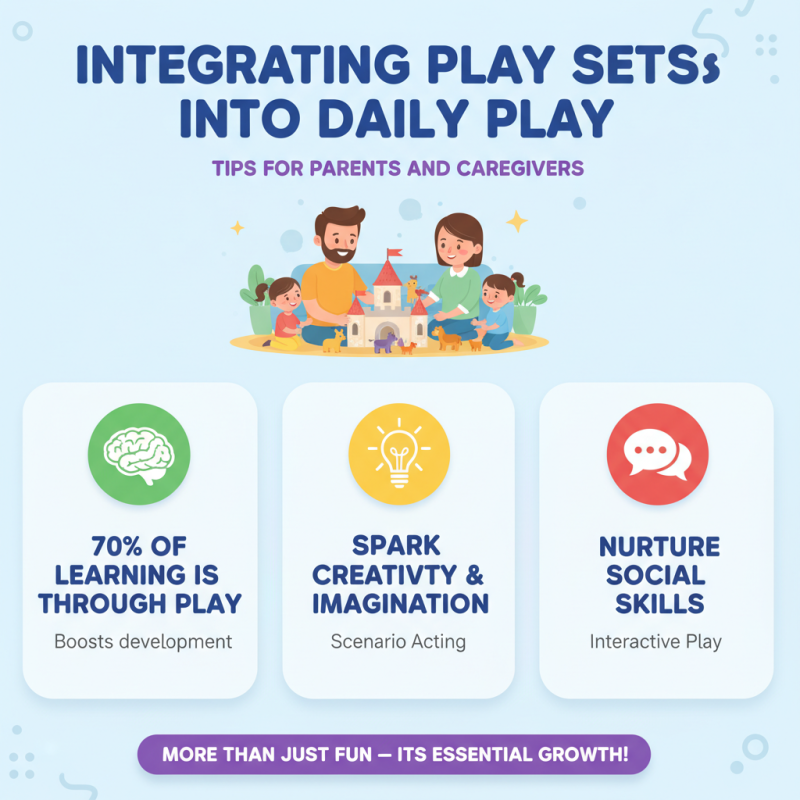
Integrating play sets into daily play can significantly enhance children's development and engagement. Research indicates that 70% of childhood learning occurs through play. This statistic underscores the importance of providing diverse play experiences. Play sets encourage creativity and imaginative thinking, offering children the chance to act out scenarios. They help develop social skills as kids interact during play.
One effective approach for parents is to designate a play area. This space should be inviting and free from distractions. Incorporating themed play sets allows children to dive into different worlds. For example, a miniature kitchen can spark interest in cooking. Alternatively, a construction set encourages building and engineering skills. Regularly rotating these sets can keep playtime fresh and exciting, yet it may lead some children to feel attached to certain toys. Parents should observe their child’s preferences and respond accordingly.
Another aspect to consider is the balance of structured and unstructured play. While play sets provide structure, it’s crucial to allow for free play as well. Children need time to explore their creativity without boundaries. This balance fosters independence. Ensuring that playtime remains enjoyable is essential; too much emphasis on learning tools can make play feel like a chore. Allowing children the freedom to choose and explore their interests helps develop lifelong skills.
 +86-13901441113

 CONTACT NUMBER
 CONTACT NUMBER