Why is Nursery Outdoor Play Essential for Child Development?
Nursery Outdoor Play is a critical element in child development. Experts in early childhood education emphasize its importance. Dr. Karen Smith, a well-known child development specialist, states, “Outdoor play fosters creativity and physical health in young children.” Her insights highlight how such play is more than just fun; it is vital for growth.
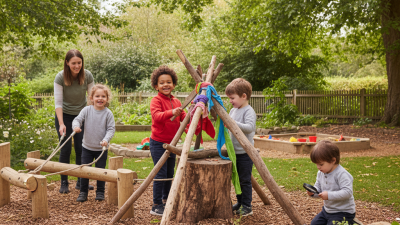
Children engage with nature during Nursery Outdoor Play, which boosts their sensory development. They feel the texture of grass, hear birds chirping, and explore different plants. These experiences help build cognitive skills. Furthermore, children learn to manage risks while climbing or jumping. This aspect of play teaches resilience and problem-solving.
However, many caregivers overlook the significance of outdoor play. Busy schedules often focus on structured indoor activities. Yet, nature provides unique challenges. These can foster independence and cooperation among peers. The balance between guided play and free exploration remains a topic for reflection among educators and parents. Prioritizing Nursery Outdoor Play can lead to more rounded and capable children.
Importance of Outdoor Play in Early Childhood Development
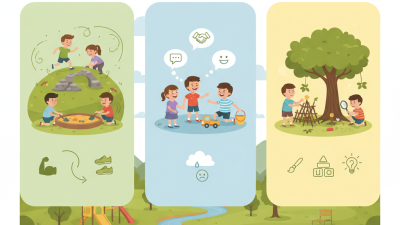
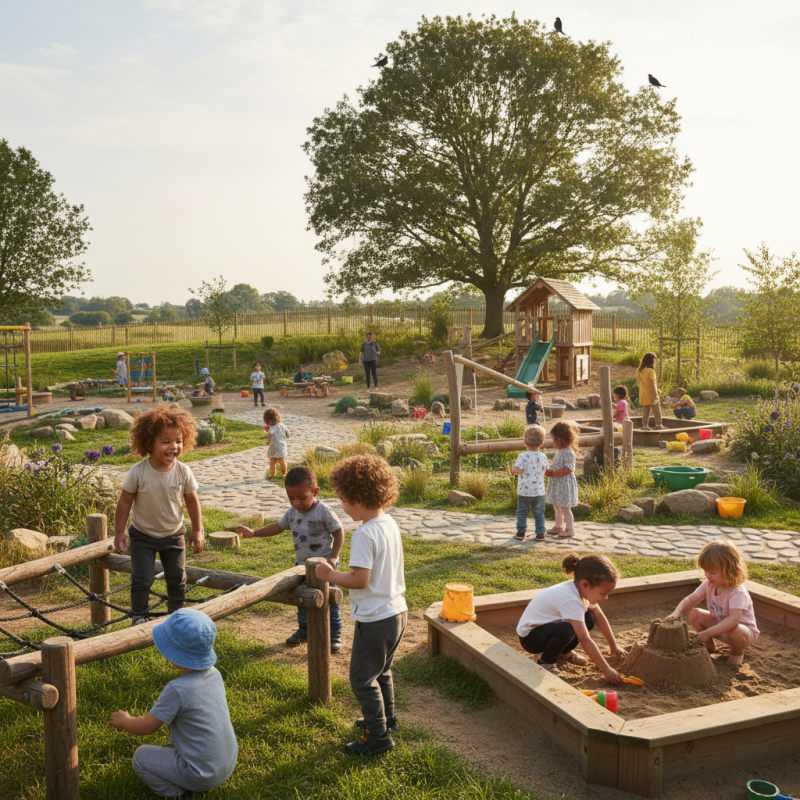
Outdoor play is vital for early childhood development. It provides children with opportunities to explore their environment. When kids play outside, they encounter various textures and sounds. This sensory engagement fosters cognitive growth. Grass beneath their feet or the feel of cool water can spark curiosity. Nature also encourages imaginative play. Children invent stories and scenarios, enhancing creativity.
Physical activity is another critical aspect of outdoor play. Running, jumping, and climbing help improve motor skills. However, some children may hesitate to try challenging activities. Encouraging them gently can build confidence. There is a risk of falls, but learning to navigate these risks is essential for growth. These experiences teach resilience and problem-solving skills.
Additionally, outdoor play nurtures social skills. Children learn to cooperate during group games. Conflicts can arise, but these moments are valuable learning opportunities. They teach negotiation and communication. The importance of sharing and taking turns is emphasized through play. While structured activities have their place, free play outdoors promotes holistic development in ways that classrooms may not.
Physical Benefits of Outdoor Play for Young Children
Outdoor play is crucial for young children's physical development. It encourages gross motor skills as kids run, jump, and climb. Activities like these promote coordination and balance. When children play outside, they engage their muscles in various ways. This has a positive effect on their physical health.
Moreover, outdoor play can improve overall fitness levels. Fresh air and natural sunlight provide essential Vitamin D. This boosts their immune system and promotes better sleep patterns. Playing outside also helps children to build stronger bones and muscles. They learn to take risks, which enhances their confidence.
However, not all outdoor play experiences are perfect. Some children may feel anxious or shy in open environments. Others might struggle with physical challenges. These situations require reflection and improvement from caregivers. Understanding these experiences can create a supportive outdoor play environment for all children.
Social Skills Development Through Nursery Outdoor Activities
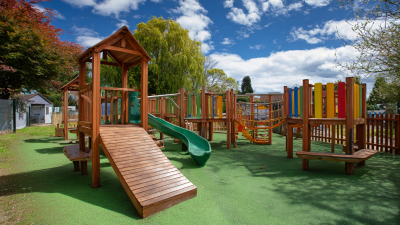
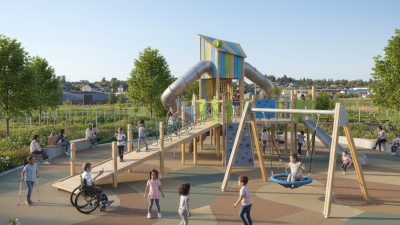
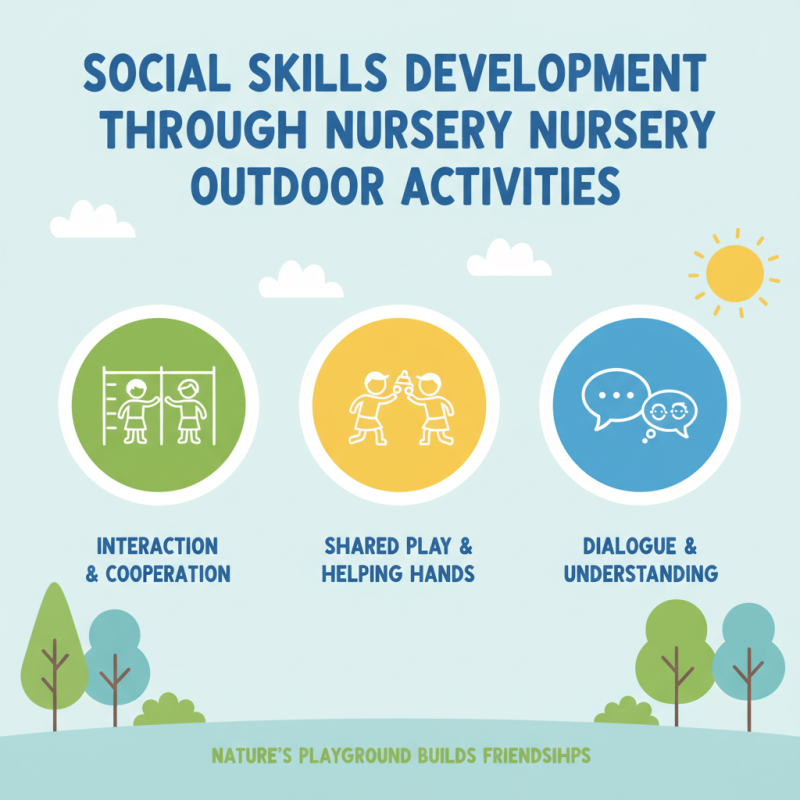
Outdoor play in nursery settings is crucial for developing social skills in young children. When children engage in outdoor activities, they naturally interact with peers. Climbing structures or shared play spaces encourage cooperation. One child might need help reaching the top. Another may offer a hand. These moments create opportunities for dialogue and understanding.
Imaginative play outdoors fosters communication. Children often role-play scenarios, enhancing their vocabulary and expressive abilities. They learn to negotiate roles, which builds their teamwork skills. However, conflicts can arise during play, presenting a chance to learn conflict resolution. Children might argue over toys but can work through their disagreements with guidance. This sort of interaction teaches empathy and emotional intelligence.
Nature itself can provide valuable lessons. A child may notice how plants grow or how weather changes. These observations can spark conversations about life cycles and teamwork in nature. It's common for children to feel frustrated or overwhelmed during play. Reflecting on these feelings helps them grow and understand their emotions better. While outdoor play may not always go smoothly, the valuable lessons it offers in social skills cannot be overlooked.
Cognitive Development Stimulated by Nature-Based Play
Nature-based play is vital for cognitive development in young children. When children play outside, they encounter various stimuli. These experiences enhance their creativity and problem-solving skills. For example, climbing a tree or building a fort requires planning and critical thinking. Children learn to assess risks and make decisions actively.
Engaging with nature fosters curiosity. When children explore their environment, they ask questions and seek answers. They might notice the texture of a leaf or the sound of rustling branches. This curiosity leads to deeper cognitive engagement. However, not all outdoor experiences are structured. Unsupervised play can sometimes lead to minor accidents. This unpredictability can cause frustration for both children and caregivers. Nonetheless, it encourages resilience and adaptability.
Social interactions during outdoor play also enhance cognitive growth. Children negotiate roles in games, developing communication skills. They learn to share ideas and resolve conflicts. While occasional disagreements occur, these moments offer rich learning experiences. Overall, nature-based play is essential for nurturing cognitive development in children, despite its imperfect nature.
Why is Nursery Outdoor Play Essential for Child Development?
This chart illustrates the cognitive development areas stimulated by nature-based outdoor play for children aged 3-5 years. The data represents observed improvements in various cognitive skills related to outdoor play experiences.
Emotional Well-Being and Resilience Gained from Outdoor Experiences
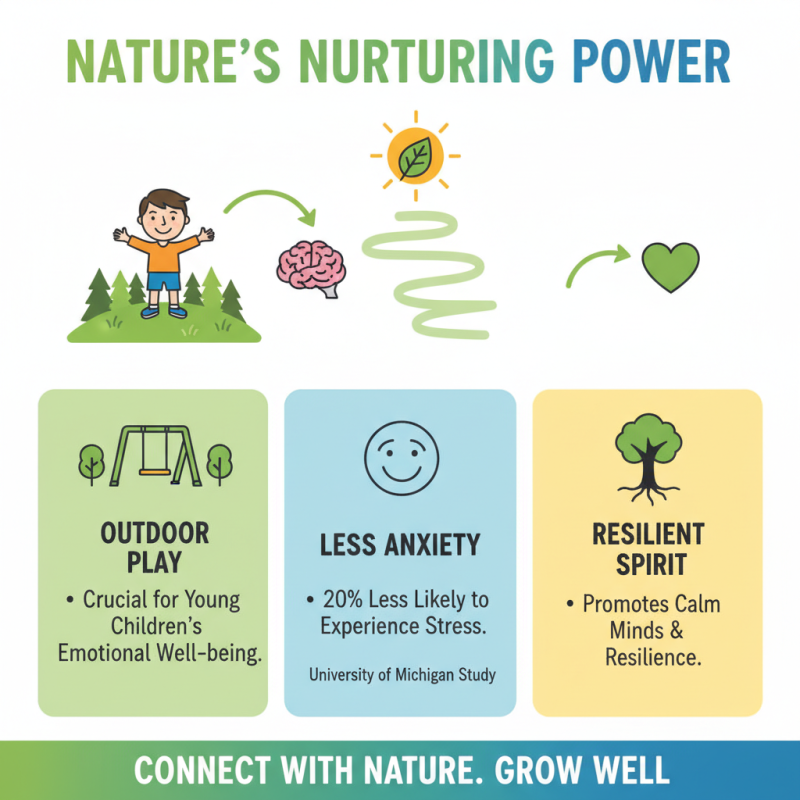
Outdoor play is crucial for nurturing emotional well-being in young children. Research indicates that children engaged in outdoor activities show significantly lower levels of anxiety. A study from the University of Michigan reveals that kids who play outside are 20% less likely to experience stress compared to those who play indoors. This connection with nature promotes a calm mind and a resilient spirit.
Through outdoor experiences, children develop coping strategies. They learn to navigate challenges, whether climbing a tree or sharing a swing. These moments foster resilience, as children face small failures and learn to try again. The Centers for Disease Control and Prevention highlight that such experiences enhance social skills, leading to stronger friendships. These skills are vital for long-term emotional health.
Yet, access to safe outdoor spaces remains a challenge. Not all communities provide these vital environments. When children miss out on outdoor play, their emotional growth may stagnate. It is essential to advocate for safe and accessible play areas, ensuring every child can benefit from the emotional support that nature provides.
 +86-13901441113

 CONTACT NUMBER
 CONTACT NUMBER