How to Enhance Preschool Outdoor Play for Child Development?
In recent years, the significance of preschool outdoor play has gained considerable attention. Studies reveal that children engage more effectively with nature, leading to enhanced cognitive and social skills. According to the American Academy of Pediatrics, outdoor play significantly boosts physical health and well-being, with nearly 80% of children needing more active time outside. Engaging in outdoor environments allows children to explore, which cultivates creativity and independence.
Unfortunately, many preschool programs underutilize outdoor spaces, mainly relying on indoor classrooms. This limits children’s exposure to the natural world. Research from the Outdoor Foundation shows that only 26% of parents encourage outdoor play regularly. There is a troubling trend where technology often replaces nature in children's activities. The implications for child development are concerning, as lack of outdoor experiences can hinder emotional growth and reduce problem-solving skills.
Enhancing preschool outdoor play can address these gaps. It requires intentional planning and support from educational stakeholders. Creating engaging outdoor activities can foster essential skills. By prioritizing outdoor experiences, we can lay a strong foundation for healthy development. However, the challenge remains: how can educators balance indoor and outdoor learning in an age dominated by screens? This question requires ongoing reflection and innovation in preschool curricula.
Understanding the Importance of Outdoor Play in Early Childhood Development
Outdoor play is essential in early childhood development. Research shows that children who engage in regular outdoor activities develop better motor skills, social skills, and cognitive abilities. A report by the American Academy of Pediatrics states that play contributes significantly to a child's overall health and well-being. In fact, outdoor play can boost creativity and resilience.
Being outdoors stimulates all five senses. Children can feel the grass, hear birds, and see changes in nature. These experiences enhance their sensory development. However, many preschools struggle to provide sufficient outdoor playtime. A study indicated that less than 50% of preschools allocate enough time for outdoor activities. This raises questions about how much nature exposure children truly receive.
Additionally, children face risks in outdoor play environments. Safety concerns often overshadow the benefits. It's crucial to balance risk with exploration. While children need safe spaces, they also thrive when facing natural challenges. Facilitating risk in play allows children to build confidence and learn problem-solving skills. Reflecting on these dynamics can help educators create a richer outdoor experience.
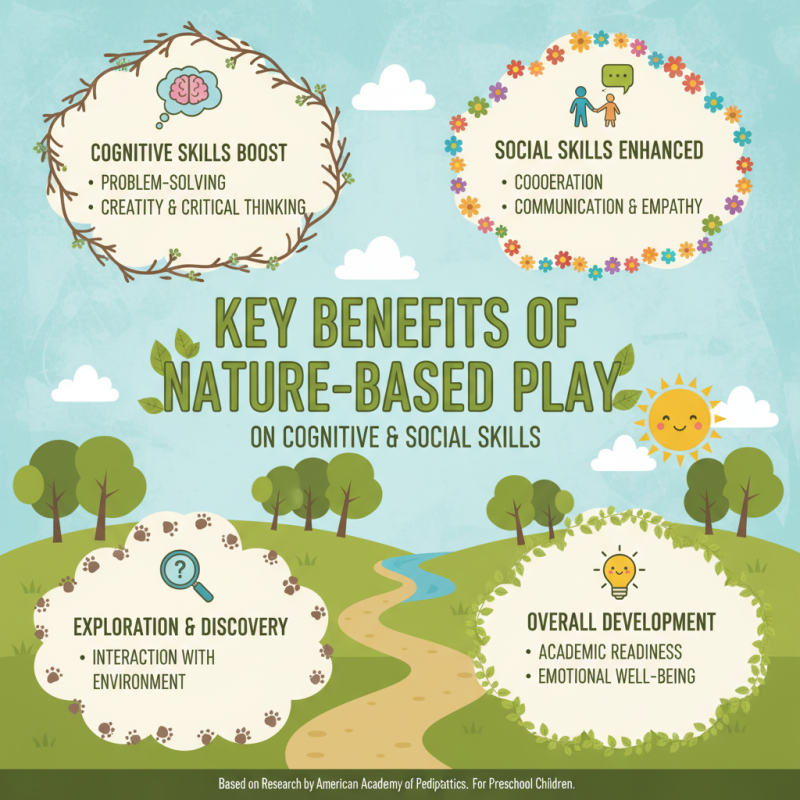
Key Benefits of Nature-Based Play on Cognitive and Social Skills
Nature-based play offers numerous benefits, especially for preschool-age children. Research has shown that outdoor play fosters cognitive and social skills. A study by the American Academy of Pediatrics found that children who engage in outdoor play have better problem-solving skills and creativity. These experiences promote critical thinking as kids interact with their environment.
Play in natural settings enhances social interactions. It encourages cooperation and communication among peers. A report from the National Association for the Education of Young Children indicates that outdoor play helps improve children's ability to form friendships and understand social cues. Children learn to negotiate and lead during group activities, which builds their confidence.
Tips for enhancing outdoor play:
1. Create diverse play areas. Incorporate natural elements like logs, rocks, and plants. Children are more engaged in imaginative play.
2. Encourage free play. Give children time to explore without structured activities. Unstructured time often leads to deeper learning.
3. Observe and reflect. Take notes on how kids interact outdoors. This can help in planning future outdoor activities that cater to their interests.
Ultimately, nature-based play can have lasting impacts on child development. While not all outdoor experiences will be perfect, the growth they foster is invaluable.
Strategies for Creating Engaging Outdoor Play Spaces for Preschoolers
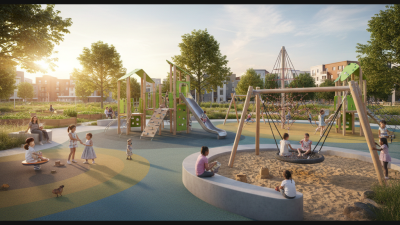
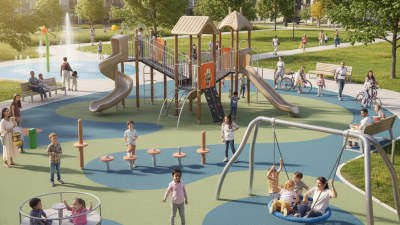
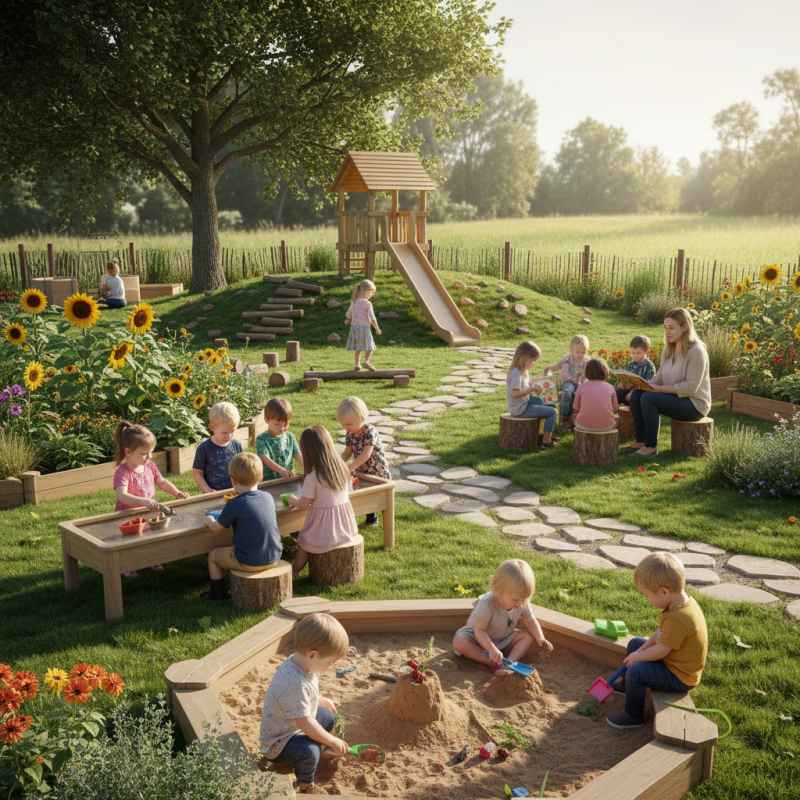
Creating engaging outdoor play spaces for preschoolers is essential for child development. Natural elements like trees, rocks, and plants inspire curiosity. Provide various textures and colors to stimulate sensory exploration. Sandboxes or water play areas can be exciting additions. These elements encourage creativity and imaginative play.
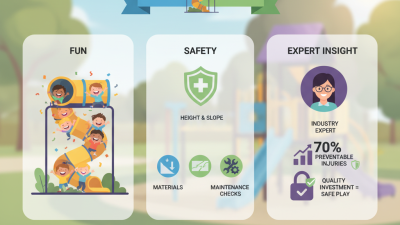
Safety is a priority but consider some risk. A slightly uneven surface or large climbing structures promote physical challenge. This pushes children’s boundaries. Regularly assess these areas for hazards, yet welcome a little risk. Children learn from getting a little messy and taking small falls.
Incorporate interactive features. A small garden for kids can teach responsibility. They can plant flowers or vegetables, connecting them to nature. Provide simple tools for digging or watering. Consider rotations in play activities to keep engagement high. Some children thrive in unstructured play, while others might prefer guided experiences. Observing their preferences will help refine the space.
Enhancing Preschool Outdoor Play for Child Development
Incorporating Risky Play to Foster Resilience and Problem-Solving Skills
Outdoor play is essential for preschoolers' development. When children engage in risky play, they learn valuable life skills. Climbing trees, balancing on logs, or navigating through rough terrain boosts their confidence. Children take calculated risks, feeling exhilarated while stretching their limits. This kind of play often leads to minor scrapes and bruises, but that’s part of the learning process.
Facing challenges helps kids develop resilience. Instead of constant supervision, letting them explore freely encourages problem-solving. If a child struggles to climb a rock, they’ll think creatively to find a solution. They might try different approaches or seek help from friends. These moments are crucial for building social skills and fostering independence.
However, we must balance freedom and safety. Too much risk can lead to real dangers. Tracking their experiences helps educators and parents reflect on what works and what doesn't. Our goal is to create a rich, engaging outdoor environment where preschoolers can thrive. Embracing some imperfections in the process allows children to grow. They learn to assess risks and understand their capabilities.
Measuring the Impact of Outdoor Play on Preschoolers' Physical Health
Preschoolers thrive through outdoor play. Engaging in physical activities outside can significantly enhance their physical health. Running, jumping, and climbing help build strong muscles and improve coordination. Simple activities like playing tag or pushing a toy car can promote cardiovascular health in young children.
Tips: Create a safe environment for outdoor play. Use soft grass or soft surfaces to minimize falls. Limit the use of playground equipment; let kids explore natural spaces. Observe how they interact with their surroundings. Are they climbing trees? Collecting leaves? These actions aid in developing spatial awareness and motor skills.
While outdoor play benefits physical health, some challenges arise. Weather changes can limit outdoor time. Safety concerns may restrict how freely children can explore. However, indoor alternatives exist. Use safe indoor play equipment that mimics outdoor activities. Yet, nothing truly replicates the fresh air and open space. Kids need that experience. Reflect on how often you prioritize outdoor play. It’s essential for overall growth.
How to Enhance Preschool Outdoor Play for Child Development? - Measuring the Impact of Outdoor Play on Preschoolers' Physical Health
| Age Group |
Outdoor Play Duration (hrs/week) |
Physical Health Score (out of 100) |
Social Skills Rating (out of 5) |
Cognitive Development Score (out of 100) |
| 3-4 years |
10 |
85 |
4.2 |
78 |
| 4-5 years |
12 |
90 |
4.5 |
80 |
| 5-6 years |
15 |
92 |
4.7 |
85 |
 +86-13901441113

 CONTACT NUMBER
 CONTACT NUMBER