Best Outdoor Playground Swing Options for Creative Play?
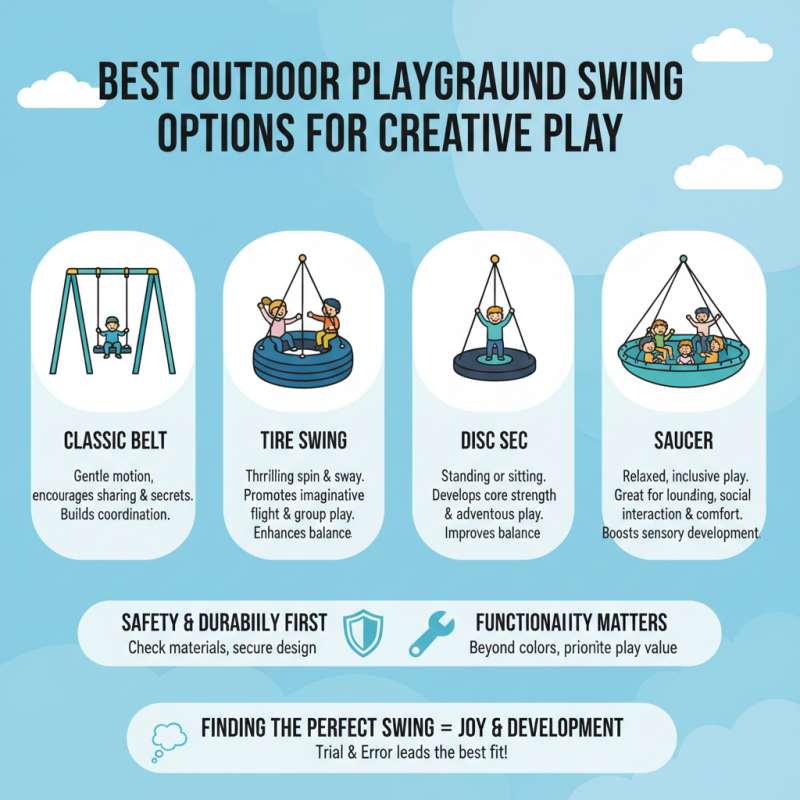
When it comes to outdoor play, few things compare to a well-designed Outdoor Playground Swing. Swings are more than just fun; they spark creativity and inspire active play. A swing is a simple structure, yet it invites children to explore their imaginations in ways we often overlook. Children can soar through the air, pretend to fly, or even share secrets with friends while swinging side by side.
Choosing the right Outdoor Playground Swing can empower kids to build physical skills, such as coordination and balance. However, not all swings are created equal. Safety and durability are crucial. Parents must consider the materials used and the design of the swing to ensure it supports safe, enjoyable play. It’s easy to get swept away by vibrant colors and trendy designs, but functionality should remain a priority.
Moreover, kids have unique preferences. Some may desire the gentle swing of a classic seat, while others yearn for the thrill of a tire swing. Reflecting on our own childhood swings, we realize that the best choices often came from trial and error. By assessing various options, parents can enhance their children’s play experiences while ensuring safety and fun. Finding the perfect Outdoor Playground Swing may take time, but the joy it brings makes it worthwhile.
Types of Outdoor Swings for Varying Age Groups and Needs
When choosing outdoor swings, it's important to consider the age group of the children. Toddlers, for example, need swings with high backs and safety features. These swings often include harnesses to secure young children while they play. They enable the little ones to experience the joy of swinging safely. Toddlers enjoy movement, and a secure swing can foster their physical development. It's essential to supervise them closely.
For older kids, traditional belt swings are a great choice. These allow for more freedom of movement and can accommodate various weights. They promote creativity as kids can engage in imaginative play while swinging high. Yet, sometimes older children may push each other's limits. This can lead to accidents if not monitored. It's crucial to establish safety rules and ensure swings are installed correctly.
Lastly, swings for special needs children are also available. These swings often have unique shapes, like bucket seats or padded designs, to provide comfort. They can help with sensory processing and motor skills. However, finding the right swing may require research. Each child is different, so it's important to consider their specific needs. A custom fit might be necessary to ensure safety and enjoyment.
Best Outdoor Playground Swing Options for Creative Play
| Swing Type |
Age Group |
Weight Capacity |
Material |
Features |
| Traditional Bucket Swing |
6 months - 3 years |
50 lbs |
Plastic |
Safety harness, back support |
| Classic Belt Swing |
3 - 10 years |
100 lbs |
Canvas / Nylon |
Simple design, comfortable seat |
| Disc Swing |
5 - 12 years |
150 lbs |
Plastic / Metal |
360-degree spinning, swinging fun |
| Glider Swing |
4 - 10 years |
200 lbs |
Metal |
Two-seater, encourages teamwork |
| Swing Seat with Backrest |
3 - 8 years |
75 lbs |
Plastic |
Back support, safety belts |
Materials to Consider for Durable and Safe Swing Sets
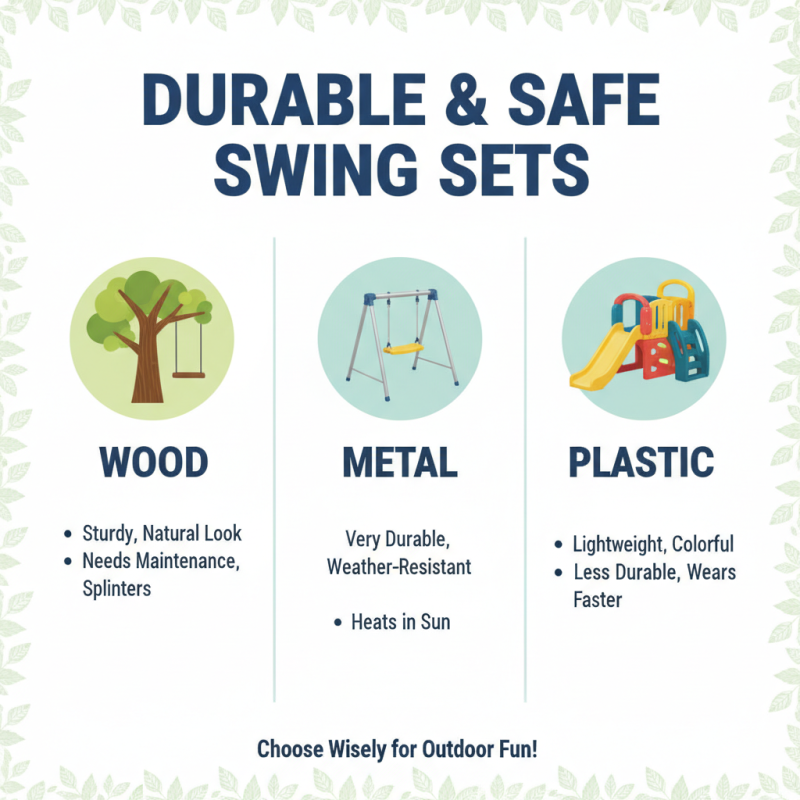
When choosing swing sets for outdoor play, material quality matters greatly. Wood, metal, and plastic are common options, each with pros and cons. Wooden swings are sturdy and blend well with natural settings. However, they require regular maintenance to prevent rot and splinters. Metal swings are durable and can withstand harsh weather, but they may become hot in direct sunlight. Plastic swings are lightweight and usually come in vibrant colors, making them appealing to kids. Yet, they may wear out faster than other materials.
It's crucial to pay attention to safety. Look for swings with padded seats and sturdy hardware. Ensure that all parts are non-toxic and free from sharp edges. Regular inspections are a must. Check for rust on metal components, cracks in plastics, or rotting wood. Children’s safety should never be compromised.
**Tip:** Allow children to choose their swings. Engagement fosters creativity in play. A swing set that reflects their choices enhances enjoyment. Be aware that swings should be appropriately sized for each child, promoting proper use. Encourage imaginative play with different swing configurations, and ensure they play in a safe, open area.
Design Features That Enhance Creative Play in Outdoor Swings
When selecting outdoor swings, design features greatly influence creative play experiences. Swings that allow for diverse movements can enhance children's imagination. For instance, adjustable swing heights can accommodate various age groups. A study by the American Academy of Pediatrics emphasizes the need for versatile play equipment, as it can foster social skills and cognitive development.
The incorporation of unique shapes is also beneficial. Swings shaped like nests or hammocks can create a cozy space for children. This design encourages group play and interaction, promoting teamwork. According to a report from the National Recreation and Park Association, inclusive swings cater to children of all abilities, enhancing community integration.
While evaluating these design elements, it is crucial to consider safety. Swings should have smooth edges and sturdy materials. Despite the emphasis on creativity, the balance between fun and security is essential. Parents might need to reflect on these aspects during their selection process for outdoor swings. Safety standards, outlined by the Consumer Product Safety Commission, provide guidelines on ensuring children's well-being while playing.
Safety Standards for Outdoor Swings: What Parents Should Know
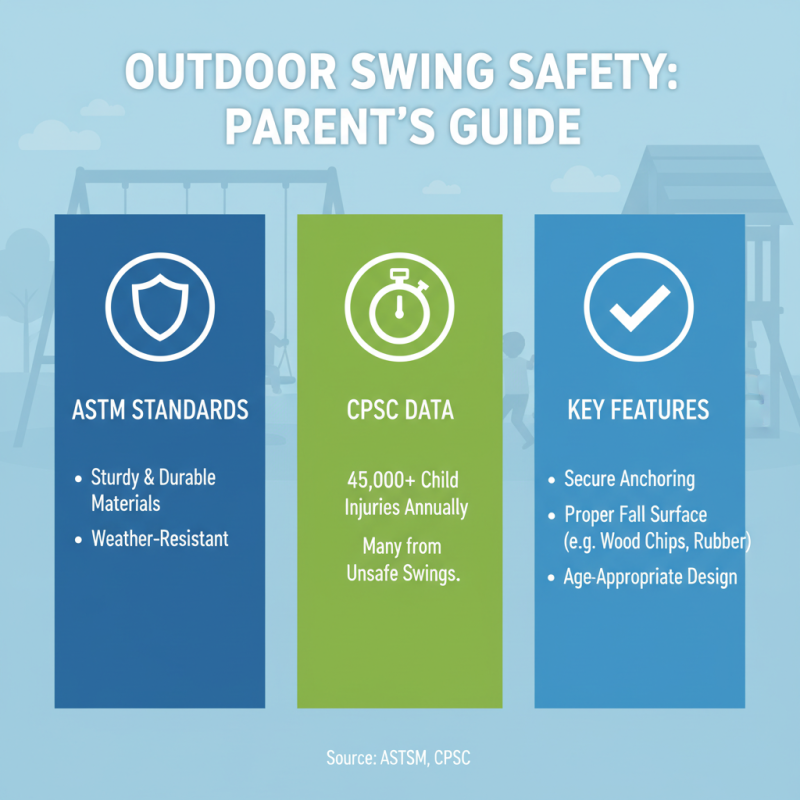
When selecting outdoor playground swings, safety is paramount. The American Society for Testing and Materials (ASTM) sets rigorous safety standards for these products. Swings must be sturdy and durable, constructed from materials that can withstand various weather conditions. According to the Consumer Product Safety Commission (CPSC), over 45,000 children are treated annually for injuries related to playground equipment, with a considerable number linked to improper swing safety features.
Parents should look for swings with safety harnesses for younger children. Such features significantly reduce the risk of falls. Additionally, swings should be installed on shock-absorbing surfaces, such as mulch or rubber mats, to cushion any potential impacts. The CPSC suggests a minimum distance of six feet around swings to prevent collisions with other equipment. This information highlights the importance of spatial awareness in playground design.
While many swings meet basic safety standards, parents must regularly inspect them for wear and tear. Frayed ropes or cracks in the seat can pose dangers. The reality is that not all manufacturers provide clear guidelines for maintenance. This can create a false sense of security. Awareness and proactive preparedness can help mitigate risks, ensuring that creative play remains safe and enjoyable.
Installation and Maintenance Tips for Outdoor Playground Swings
When installing outdoor playground swings,
safety and accessibility
are top priorities. Choose a location that is flat, level, and free of obstacles.
The area should allow for adequate swing clearance, both in front and behind.
A safe zone of at least six feet is recommended.
This helps prevent injuries when children swing high. Consider using an
impact-absorbing surface
beneath the swings, like rubber mats or mulch, to further enhance safety.
Regular maintenance is essential for keeping swings in top condition.
Check for rust or damage every few months.
Look for loose bolts and tighten them as needed.
Replace any worn-out parts immediately. It’s also wise to clean the swings regularly to prevent dirt buildup,
which can lead to deterioration. If swings wobble or squeak, it indicates a potential problem that must be addressed.
Being proactive about these issues can prevent accidents and prolong the life of your playground equipment.
 +86-13901441113

 CONTACT NUMBER
 CONTACT NUMBER